Paris Studio Flats: Minimum Legal Rental Size and the Pitfalls to Avoid
The reality behind Paris's tiny flats. People often say that in Paris, anything will rent, regardless of condition or size. That's a dangerous myth. The small-flat market is the most opaque in the capital, where abuses of the minimum legal rental size are common. Between service rooms converted into studios and mezzanines counted unfairly, tenants need to be extra vigilant.
By Bénie RollandPublished on Updated on
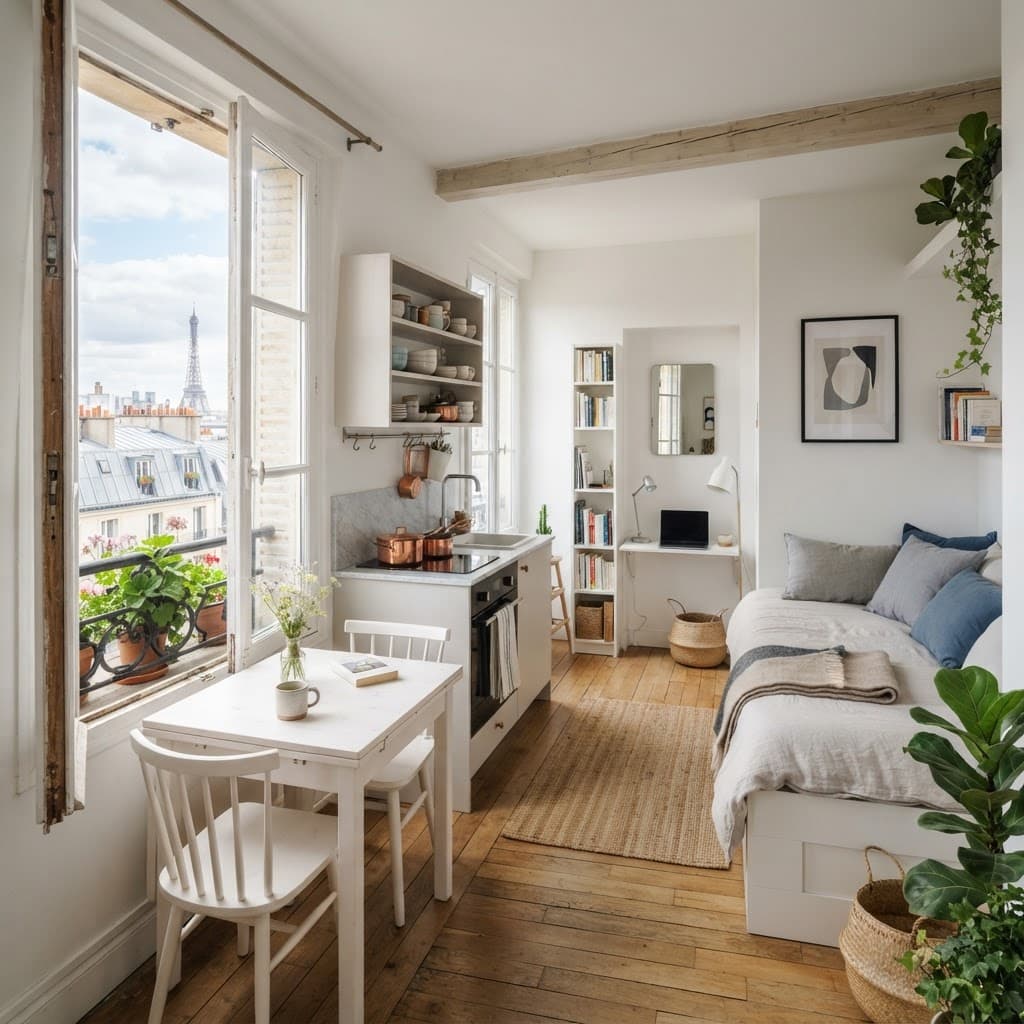
The reality behind Paris's tiny flats
People often say that in Paris, anything will rent, regardless of its condition or size. That's a dangerous myth. The small-flat market is the most opaque in the capital, where abuses of the minimum legal rental size in Paris are common. Between former service rooms (chambres de service) converted into studios and mezzanines counted unfairly towards the floor area, tenants need to be extra vigilant to avoid signing an unlawful lease.
Decency rules: don't mix everything up
The law is nonetheless clear on what constitutes a decent home. To be let as a main residence, a property must have a living area (surface habitable) of at least 9 m² with a ceiling height of 2.20 m, or a living volume of 20 m³. Note that this living area (under the Boutin law) is quite different from the Carrez area, which only applies to co-owned properties being sold and excludes areas with a ceiling height below 1.80 m.
It's common to see listings advertising a large floor area when the actual living area is much smaller. If you're viewing a property, bring a laser measure. Sloped (mansard) areas only count if the ceiling height is sufficient. If the property doesn't meet these criteria, it simply isn't fit to be let.
Classic listing pitfalls
Property listings often use vague terms to mask structural flaws. Here's what to watch out for:
- The mezzanine: It's often included in the living area even though it doesn't meet the height requirements. If it isn't accessible via a fixed, safe staircase, it shouldn't be counted as living space.
- Former service rooms (chambres de service): Often located under the roof, these tend to have poor thermal insulation. In 2026, energy-decency criteria are strict. A property rated G cannot legally be let, and class F will soon be affected too. Always check the EPC (DPE) before committing.
- Disproportionate service charges: On small flats, charges can eat up a large share of the budget. Analyse them before signing, as we explain in our guide on service charges in Paris.
Rent control: your shield
Rent per square metre often shoots up on small flats. Yet Paris applies strict rent control. The upper reference rent (loyer de référence majoré) is calculated according to the neighbourhood, the building's construction period, and the number of rooms. Don't be intimidated by a landlord who justifies an above-cap rent with a supposed “rent supplement” (complément de loyer). This is only allowed for exceptional features (a view of a landmark, a terrace of more than 9 m², a ceiling height above 3.30 m). To find out more, see our articles on rent control in Paris.
Viewing checklist for small flats
To avoid nasty surprises, follow this method during your viewings:
- Measure: Don't trust the listing. Check the real living area yourself.
- Test the hot water and ventilation: A faulty mechanical ventilation system (VMC) in a small space quickly leads to mould.
- Ask for the EPC: It's a legal requirement. A poorly insulated home will be a financial drain on heating costs.
- Ask about the previous rent: The landlord must tell you the rent paid by the previous tenant, so you can check that rent control has been respected.
To succeed in your search in this tight market, feel free to check our tips for succeeding in your rental search in Paris in 2026.
FAQ: Your questions about renting in Paris
What is the minimum size to rent a property in Paris?
The law requires a minimum living area of 9 m² with a ceiling height of 2.20 m, or a living volume of 20 m³, for a property to be considered decent.
Is the EPC mandatory for a studio flat?
Yes, the Energy Performance Certificate (DPE) is mandatory for any letting. It confirms that the property isn't an energy sieve, which is crucial for small flats that are often poorly insulated.
Can I challenge a rent that's too high?
Absolutely. If the rent exceeds the upper reference rent with no valid justification (a documented rent supplement), you can take action to have the rent brought into compliance.
Need an expert for your search?
The Paris market has no patience for improvisation. At APPARTE, we support tenants in their search to secure every step, from checking the property's decency to signing the lease. Stop wasting time on questionable listings. Book an appointment with APPARTE to hand over your search and find a compliant home, at a fair price, that meets the minimum legal rental size in Paris.

Read next
Three articles to go further.

Tenant Home Insurance in France: What Is Compulsory and What Is Advisable
Every tenant must insure their home against tenant's liability risks and give the certificate to the landlord. Compulsory and optional cover, penalties, switching insurer: the essentials for getting insured in Paris.

Winter Truce 2026-2027: What It Protects (and What It Doesn't) for Tenants
From 1 November 2026 to 31 March 2027, no tenant can be forcibly evicted, with a few exceptions. Rent, legal proceedings, energy cut-offs, notice periods: what the winter truce really changes.

Rent Review: What the Q3 2026 Rent Index (IRL) Means for Tenants
The rent reference index for the third quarter of 2026 is up 1.57% year on year. Conditions, calculation, deadlines and remedies: how to check that your rent review is correct.